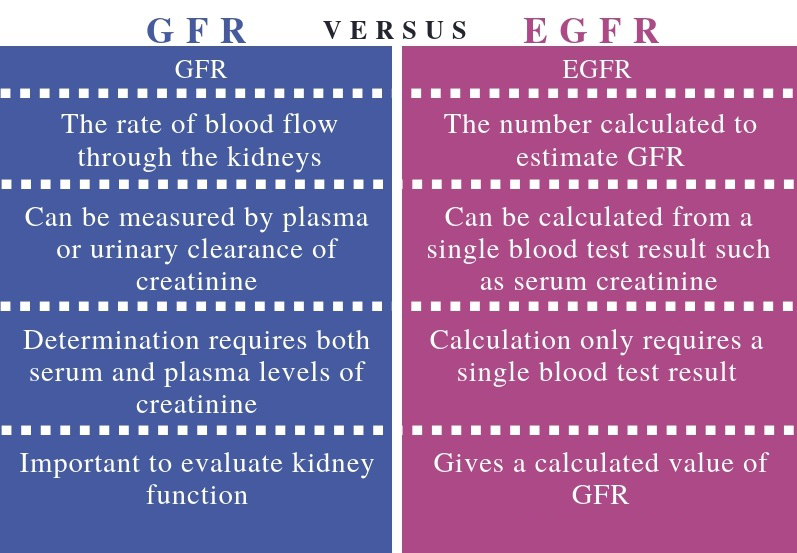

GFR (glomerular filtration rate) is the total filtration rate of functional nephrons in the kidneys. It also reflects kidney function. Therefore, it is an important measure for the diagnosis, prognosis, and treatment of kidney disease. However, GFR is an indirect measurement. In general, it is measured in terms of the filtration rate of ideal filtration markers by the kidney. Furthermore, some Gold standard markers include insulin, iohexol or iothalamate. But, in clinical practice, creatinine is an endogenous marker used for GFR determination.
Also, the normal GFR value for the healthiest person is 90 mL/min/1.73 m2 or higher. However, it can be lowered up to 60-89 mL/min without kidney damage. Normal GFR values vary with age, sex, and body size. However, lower GFR values over a period of more than three months, along with other symptoms such as persistent protein in the urine indicate early kidney disease. Also, GFR, which is < 60 mL/min for more than three months, indicates chronic kidney disease (CKD).
What is eGFR?
eGFR (estimated glomerular filtration rate) is a calculated value of GFR by means of serum creatinine. The main advantage of eGFR is that it can be measured with the result of a single blood test using a formula. On the other hand, the calculation of GFR requires to take measures of joint measurement in blood and urine. However, the values of both GFR and eGFR are similar to each other. In addition, for adults, normal GFR values should exceed 90 mL/min.
Similarities Between GFR and eGFR
GFR and eGFR are two types of kidney function measurements.
They measure the excretory function of the kidneys and are important for diagnosing kidney diseases, especially chronic ones.
In addition, they help to diagnose other diseases, such as albuminuria and kidney disease.
The main difference between GFR and eGFR is that GFR or glomerular filtration rate describes the flow rate of filtered fluid through the kidneys while eGFR or estimated glomerular filtration rate is a number that estimates GFR. Furthermore, GFR can be measured by plasma or urinary excretion of appropriate filtration markers such as insulin, while eGFR can be calculated from single blood test results such as serum creatinine.